

The Walt Disney Company Komödie Filme

Valued at $164 billion, The Walt Disney Company is one of the biggest and most powerful companies in the world. Bully for a visitor that began with the humble vision of a homo who just wanted to entertain.
Disney's entertainment empire at present includes non simply the famed amusement parks and classic animated films, but also movie studios, television networks, music labels, countless trade and an upcoming streaming service. Let's take a await inside Walt Disney's multi-billion dollar entertainment empire to run into what else nosotros observe.
Humble Beginnings
Walter Elias (Walt) Disney was born in Chicago, Illinois, in 1901, although he spent the majority of his babyhood on a farm in Marceline, Missouri. He had a fascination with cartoon as a kid and often drew pictures of the animals on his farm and effectually boondocks. In fact, he made his commencement nickel by cartoon a picture show of Rupert, the equus caballus owned by the town doc, Doc Sherwood.

In 1920, Disney become his get-go real job in blitheness every bit an apprentice with the Kansas Metropolis Picture show Ad Company in Missouri. He earned $50 a month while he worked on honing his craft and learning more well-nigh the business organisation.
A few years later, Disney and his friend Ub Iwerks founded Express joy-O-gram Films, a motion-picture show company that produced short animated snippets that were shown in the local theater. The cartoon clips were based on pop fables and fairy tales. Diverse prominent animators, including Hugh Harman, Rudolf Ising and Isadore "Friz" Freleng, worked alongside Disney and Iwerks on the business venture.

The blithe snippets did well in theaters. In 1923, Disney produced Alice in Cartoonland, which combined both live action and animation. It was intended to be the pilot movie in a series. Still, a few weeks afterward it was completed, Disney filed for defalcation and left Kansas City.
Hollywood Dreams
Disney left for Hollywood in hopes of establishing a career there as a respected cinematographer and animator. Even subsequently the failure of Laugh-O-gram Films, Alice in Cartoonland actually became a large hit, and distributors wanted Disney to create more Alice films for kids.

With the huge interest in related films, Disney teamed up with his brother Roy to create Disney Brothers Cartoon Studio, which was afterward renamed Walt Disney Studios. Disney promptly asked the animators, including Iwerks, from his Kansas Metropolis venture to join his team in California. Together, they produced mostly Alice films for the first 4 years of the company's life.
A Human being and a Mouse
In 1927, Disney started his outset series of fully animated films featuring the character Oswald the Lucky Rabbit. The black and white bunny became pretty popular with children. Unfortunately, the future mogul somewhen lost the rights to the character when a business organization bargain with his benefactor went wrong.

Subsequently the major loss, Disney came upwards with the thought of a new grapheme traveling past train from New York to Hollywood. He decided to apply Oswald for inspiration but change his appearance to create a new character: Mortimer Mouse. His wife insisted the grapheme needed a better name and suggested he call the mouse "Mickey." With the help of Iwerks, the legendary mouse was built-in.
Steamboat Willie
Mickey Mouse was first seen in the silent cartoon Aeroplane Crazy (1928). Even so, after a test screening with audiences, the film failed to attract a distributor. The animators began working on another silent short film with Mickey called The Gallopin' Gaucho. However, the studio didn't release it earlier starting work on a new short film.

Steamboat Willie (1928) was the commencement sound cartoon produced by Disney Brothers Cartoon Studio, and it featured the official debut of both Mickey and Minnie Mouse. Disney provided all the voices in the picture show, and the pic received wide critical acclamation. This earned recognition for the studio that solidified the Walt Disney name in the blitheness world.
Expanding the Business organization
The company was renamed Walt Disney Productions in 1929 and continued to produce cartoons with Mickey Mouse also equally his friends: Donald Duck, Goofy and Pluto. In addition to the Mickey Mouse cartoons, the company began producing the Featherbrained Symphonies series, which featured blitheness set to classical music or the music of beloved musician Carl Stalling.

The Airheaded Symphonies cartoon Flowers and Copse (1932) was the showtime drawing produced using the 3-color Technicolor process, and it became the first animated short to win an Academy Award. The most popular of the Dizzy Symphonies cartoons was The Three Piffling Pigs (1933), which earned another Oscar.
Getting into Merchandising
In the 1930s, Walt Disney Productions expanded into merchandising its characters for an additional source of acquirement. A man in New York offered Disney $300 for the right to put Mickey Mouse on some pencil tablets he was making, and Disney agreed. That request made Disney realize the serious potential of Disney'due south characters on merchandise in the hereafter.

Presently after that, the company created Mickey Mouse dolls, dishes, toothbrushes, radios and more, and items flew off the shelves equally parents bought them for their children. At the start of the decade, fans of the mouse saw the first publishing of Mickey Mouse books and newspaper comic strips.
Animated Feature Films
In 1934, Disney approached his animators well-nigh making a full-length animated picture called Snow White and the 7 Dwarfs. He also wanted to accept a more than realistic arroyo to the look of the film, making it more like a live-action film than surreal animation. A few were skeptical of the idea at get-go, but equally time went on, everyone grew to dearest the concept.
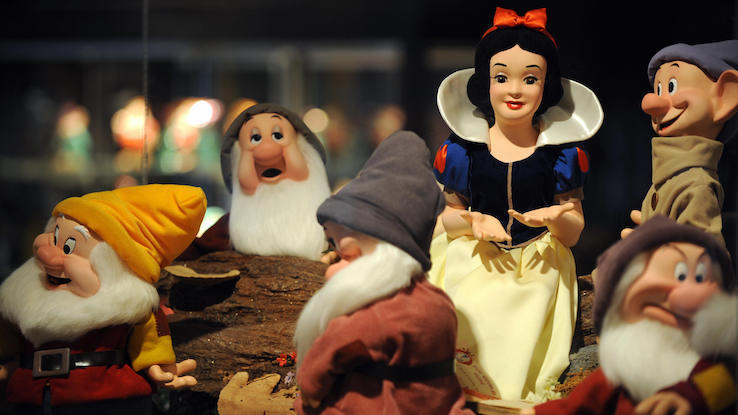
Disney knew in his heart that feature films were the hereafter for the studio, and he was right. Subsequently years of work, Snowfall White was released in 1937 and became an instant hit at the box office. In fact, it became the highest grossing motion picture of all time, a tape it held until the release of Gone with the Air current.
Fiscal Setbacks
Afterwards the incredible success of Snow White and the Seven Dwarfs, the studio began working on more than characteristic films. The adjacent two films, Pinocchio and Fantasia, were released in 1940 and were wonderful masterpieces that are withal treasured in the Disney animated catechism.

Notwithstanding, the films were released in the middle of Earth War Ii, and the toll of making them resulted in a fiscal loss, due to the loss of virtually of Disney'southward foreign markets during the state of war. Every bit a result, the moving picture Dumbo was fabricated in 1941 on a very express budget. In 1942, Bambi was some other expensive pic that pushed the studio further back financially.
Losing Its Footing
During Globe War II, Disney created two films in Due south America, Saludos Amigos and The Three Caballeros, at the request of the State Section. The studio turned its attention from animation and focused on making promotion and preparation films for the military.

After the state of war, Walt Disney Productions began creating "package" features with films similar Make Mine Music and Melody Time. These films had several groups of brusque cartoons put together for viewers. Disney too shifted into the production of alive-activity films, although some also included blithe segments. The 1940s had created a financial setback for the studio, but information technology would bounce back during the adjacent decade.
The Gold Historic period
Much similar the rest of the country, Walt Disney Productions saw a surge in films and revenue in the 1950s. The studio released its first completely live-activity moving picture, Treasure Isle, at the start of the decade besides as the animated classic Cinderella. Other animated releases that decade included Alice in Wonderland (1951), Peter Pan (1953) and Lady and the Tramp (1955).

The studio had two Christmas specials on tv set and as well released the Disneyland anthology series, which remained on the air for 29 years. Besides for TV, the company premiered the children'southward serial The Mickey Mouse Club for talented "Mouseketeers" who could act, sing and trip the light fantastic toe.
Fun for the Whole Family
As Disney films and goggle box programs were taking off one time again, Disney had another big idea. He wanted to branch out into the world of amusement parks. His young daughters loved zoos, carnivals and the like, just he e'er establish himself sitting on the sidelines since the attractions were more often than not for kids. He wanted to create a park where the entire family could have fun together.

This sparked the idea for Disneyland. Later on years of planning and construction, the new park officially opened on July 17, 1955, in Anaheim, California. It instantly became a huge success, attracting families from all over the state.
Welcome to the Sixties
For the residual of the 1950s and throughout the 1960s, the company continued to thrive. The production co-operative put out several animated films, including 101 Dalmatians (1961) and Winnie the Pooh and the Beloved Tree (1965). Information technology also continued to create alive-action movies, including The Absent Professor (1961) and The Incredible Journey (1963).

1 of Disney's greatest live-action films was Mary Poppins (1964), starring Julie Andrews and Dick Van Dyke. The film went on to win five Oscars, including one for Best Actress for Andrews, as well as nominations in seven other categories. Information technology was praised as the studio'south greatest achievement in more than 20 years.
Losing a Legend
Sadly, the 1960s likewise saw the end of an era. Walt Disney passed away on December 15, 1966, at first tumbling the visitor into financial disarray. However, he had made plans for the company before his death to ensure its futurity.

In 1965, the entertainment mogul had purchased 43 acres of land in Florida for the Walt Disney Earth Resort. Disney's brother, Roy, oversaw the construction, and the park opened in 1971. In 1982, the Experimental Prototype Community of Tomorrow, or EPCOT Center, opened near the Magic Kingdom and became another huge attraction. It was Disney's last creative idea for the company during his lifetime.
Going International
WED Enterprises (later renamed Walt Disney Imagineering) directed the design and development of Disneyland, Walt Disney Earth Resort and EPCOT in the early on 1980s. The company also initiated plans for designing a Tokyo Disneyland to be the start strange Disney park, which would open the door for more international locations in the futurity.

Tokyo Disneyland officially opened on April xv, 1983, and was an firsthand success. The Japanese had always loved everything created past Disney. Once they had their own Disney park, they flocked to the attraction in mass numbers.
Changing Times
In the 1980s, the company noticed a shift in moviemaking, equally audiences became less interested in the family films that served as the foundation for the company. Teenage movies were all the rage, and executives needed to come up with innovative means to compete. New direction came in with the hiring of Michael Eisner and Frank Wells, who served as chairman and president, respectively.

The Walt Disney Visitor created a new label, Touchstone Pictures, and released Splash in 1984. Information technology also launched its own cable network, The Disney Aqueduct. The following yr, the boob tube division created the highly successful show Aureate Girls and returned to Sunday dark television with the Disney Lord's day Movie (after renamed The Wonderful World of Disney).
Capitalizing on Success
In order to maximize its assets in the late 1980s, films from the Disney library were selected for syndication, and some archetype blithe films were released on video cassette. With this technique, Disney classics became all-time bestsellers.

During the residuum of the decade, the theme parks continued to grow likewise by creating new attractions for guests. The company forged deals with filmmakers George Lucas and Francis Coppola to bring Caption EO and Star Tours to Disneyland, and the popular Splash Mountain opened in 1989. Walt Disney World opened more than resorts and attractions in Florida, including the Caribbean area Embankment Resorts and the Disney-MGM Studios Theme Park.
Leading Hollywood Studios
In 1988, the visitor became the leading Hollywood studio in terms of box-part gross. Films that went over the $100 million milestone — huge at the time — included Who Framed Roger Rabbit; Practiced Morning, Vietnam; Pretty Woman; Honey, I Shrunk the Kids and Sister Deed. These films were all released under Touchstone Pictures.

Disney connected to expand in filmmaking with the inception of Hollywood Pictures, which produced films for teenagers and immature adults. The company also acquired the Wrather Corporation and tv station KHJ-Tv in Los Angeles. Following the purchase of Childcraft, the company opened a concatenation of Disney Stores to sell trade from popular movies and cartoons.
A Resurgence in Blitheness
The belatedly 1980s and the 1990s saw a return to prominence in animation for The Walt Disney Visitor. The archetype flick The Niggling Mermaid was a huge box part hit and returned the company to its golden formula: cartoons with catchy tunes. More than blithe hits followed, including Beauty and the Beast (1991), Aladdin (1992), The King of beasts King (1994), The Hunchback of Notre Dame (1996) and Fantasia 2000 (1999).

The company had previously dabbled in computerized animation with the alive-action feature film Tron (1982), and that same technology was used to make Toy Story (1995) and Toy Story 2 (1999). These two films were created and produced in collaboration with Pixar Animation Studios.
Heading to Broadway
With Disney finding its basis once again in animation, the company created new animated programs for television as well as straight-to-video sequels of some of its most popular animated features. Notwithstanding, another huge movement was taking a few of its newest hits to the stage.

In 1994, the visitor tried its hand on Broadway and opened a critically-acclaimed stage production of Beauty and the Beast. A few years subsequently, a stage play was created for The Lion King, which yet runs on Broadway and in other prominent theaters around the country today. The company also restored the historic New Amsterdam Theatre on 42nd Street in New York Urban center, which sparked an interest in recreating the entire Times Foursquare area.
More than Disney Attractions
In the late 1990s and early 2000s, The Walt Disney Visitor added even more attractions to its theme parks. One of the highlights was the launch of Disney's Animal Kingdom at Walt Disney Globe in 1998. Parked on 500 acres of land, the park was Disney's largest to date and featured the iconic Tree of Life and Kilimanjaro Safaris, where guests could view alive animals in a protected sanctuary.

An Asian-themed expanse was added to Creature Kingdom a twelvemonth after. Other Disney theme parks opened in Paris, Tokyo and Hong Kong. Disney also launched DisneyQuest, which were indoor theme parks with virtual-reality arcades, in Orlando and Chicago.
Cruising the High Seas
Disney fix out on a great new adventure with the outset of Disney Cruise Line. The start ship, Disney Magic, set sail on July 30, 1998. The cruise line was developed to provide the magic of Disney to families while at ocean. It incorporates many Disney characters into cruises, including Mickey Mouse and his gang and the Disney Princesses.

Disney Cruise Line currently operates four ships: Disney Magic, Disney Wonder, Disney Dream and Disney Fantasy. Electric current routes travel from ports in the U.Due south. to Alaska, the Bahamas, the Caribbean area and Europe, depending on the transport. Three new ships are set to bring together the fleet between 2022 and 2023.
100 Years of Magic
By the turn of the millennium, Walt Disney had been gone for more 30 years. However, his spirit and the legacy he left behind was still going stiff. In 2001, The Walt Disney Company historic the 100th anniversary of Walt Disney'southward birth, paying homage to the founder who had started information technology all.

The huge result — appropriately titled "100 Years of Magic" — was held at Disney-MGM Studios theme park in Florida. The commemoration included several parades, an exhibit of Disney memorabilia and the installation of a huge Mickey's sorcerer cap in the Chinese Theater plaza.
Continued Partnership with Pixar
Disney continued to create innovative and compelling films in partnership with Pixar. In May 2006, the company purchased Pixar Animation Studios outright. The animators continued to push the boundaries in estimator animation and achieved great results.
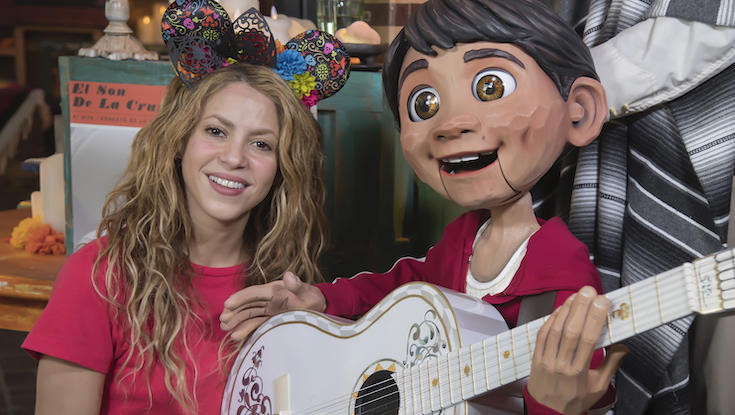
Several of the companies' collaborative films, including Finding Nemo (2003), Ratatouille (2007), WALL∙Due east (2008), Up (2009), Toy Story iii (2010), Inside Out (2015) and Coco (2017), have won Academy Awards for All-time Blithe Film. Disney also added new attractions based on its piece of work with Pixar to the parks: Finding Nemo Submarine Voyage at Disneyland, The Seas with Nemo and Friends at EPCOT and Finding Nemo — The Musical at Disney's Beast Kingdom.
Buying Marvel Amusement
One of the most meaning moves The Walt Disney Company made throughout its history was acquiring Curiosity Entertainment in 2009. The buy of the company — famous for superhero comic books and movies — came at a hefty price of $4 billion, but executives recognized the keen potential in working with Marvel.
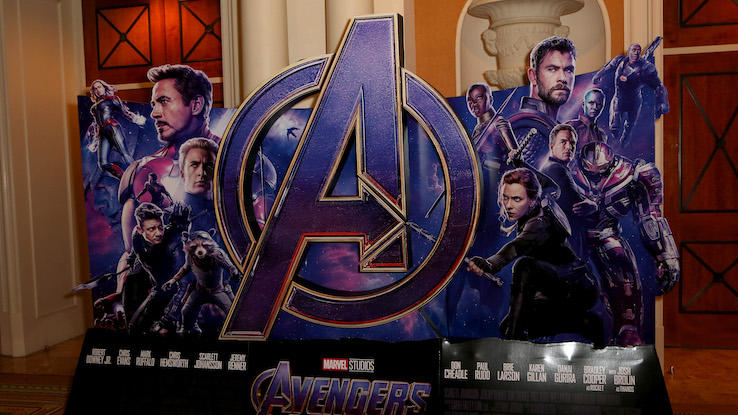
Curiosity Amusement had merely started to push out films based on its popular comic book characters at the time of the purchase. Since the acquisition, the company has produced a long list of blockbuster box office hits, including The Avengers (2012), Guardians of the Milky way (2014), Blackness Panther (2018) and Captain Marvel (2019).
More than Acquisitions
In 2012, Disney continued edifice its empire with the acquisition of Lucasfilm Ltd. from filmmaker George Lucas for approximately $iv billion. The purchase folded the entire Star Wars franchise under the Disney umbrella. In 2015, the visitor released the seventh installment in the serial, Star Wars: The Force Awakens. A twelvemonth later, a stand-alone motion picture in the Star Wars universe hit the big screen: Rogue One: A Star Wars Story (2016).

Additionally, the company went alee with purchasing most of the holdings of 21st Century Play a trick on, including the motion picture studio 20th Century Fox. The deal officially closed in 2019 and was valued at near $71 billion. Wow!
Disney Remakes
Disney had previously produced a few live-action remakes of its animated films, but this remake trend really took off in the 2010s. Some of the key movies reimagined included Alice in Wonderland (2010), Cinderella (2015) and The Jungle Volume (2016).

Disney received critical acclaim for its remake of Beauty and the Beast (2017), starring Emma Watson and Dan Stephens and featuring many of the film's original songs. The near recent remakes include dearest Disney classics Aladdin and The Lion Rex, both released in 2019. Upcoming remakes on the list include Lady and the Tramp, Mulan, The Little Mermaid and Snow White and the Vii Dwarfs.
Disney Parks Gone Mobile
In 2018, the company launched its new Play Disney Parks mobile app for use at Disneyland and Walt Disney World. Guests can use the app to enjoy all-new interactive experiences and activities created for select attraction queues, including Playset Party at Toy Story Mania! in Disney California Adventure park and Disney'south Hollywood Studios and Off to Neverland at Peter Pan'southward Flight at Disneyland and Magic Kingdom.

Guests who are signed into their Disney accounts can besides earn, collect and share uniquely themed achievements past playing games, answering trivia, completing challenges and experiencing select attractions across the two resorts. The interactive app is complimentary to download from the Apple App Store and Google Play.
90 Years of Mickey
It was a major party in 2018 when Mickey Mouse historic his 90th birthday. The mouse that started it all was celebrated with a huge caricature. In honor of Mickey, Disney parks stocked commemorative merchandise, sold limited edition desserts and hosted a variety of events as part of the "World'southward Biggest Mouse Party."

The company also ran a 2-60 minutes special on ABC chosen "Mickey's 90th Spectacular." The special featured performances by Josh Groban, Meghan Trainor and the K-pop group NCT 127. Presenters included Robert A. Iger, Disney's main executive officer, who personally oversees the Mickey brand. The commemoration was and so big that Disney theme parks continued hosting events into the next twelvemonth.
Streaming with Disney+
The latest venture for The Walt Disney Company will put information technology in direct competition with Netflix, Hulu and other streaming services. In keeping with these modern times, the visitor announced in 2018 that it would launch its own streaming platform called Disney+.

The service will feature content direct from Walt Disney Studios and Walt Disney Goggle box, including classic films, shorts and idiot box shows that fans already know and dear. Original films and television series are as well being planned, including content from Disney, Pixar, Marvel, Star Wars, National Geographic and 20th Century Play a trick on. The streaming service is ready to launch on November 12, 2019, in the The states.
Source: https://www.consumersearch.com/technology/walt-disney-multi-billion-entertainment-empire?utm_content=params%3Ao%3D740007%26ad%3DdirN%26qo%3DserpIndex
Posted by: waltersrehe1947.blogspot.com
0 Response to "The Walt Disney Company Komödie Filme"
Post a Comment